
Easy Beetroot Chutney (Sweet & Spicy)

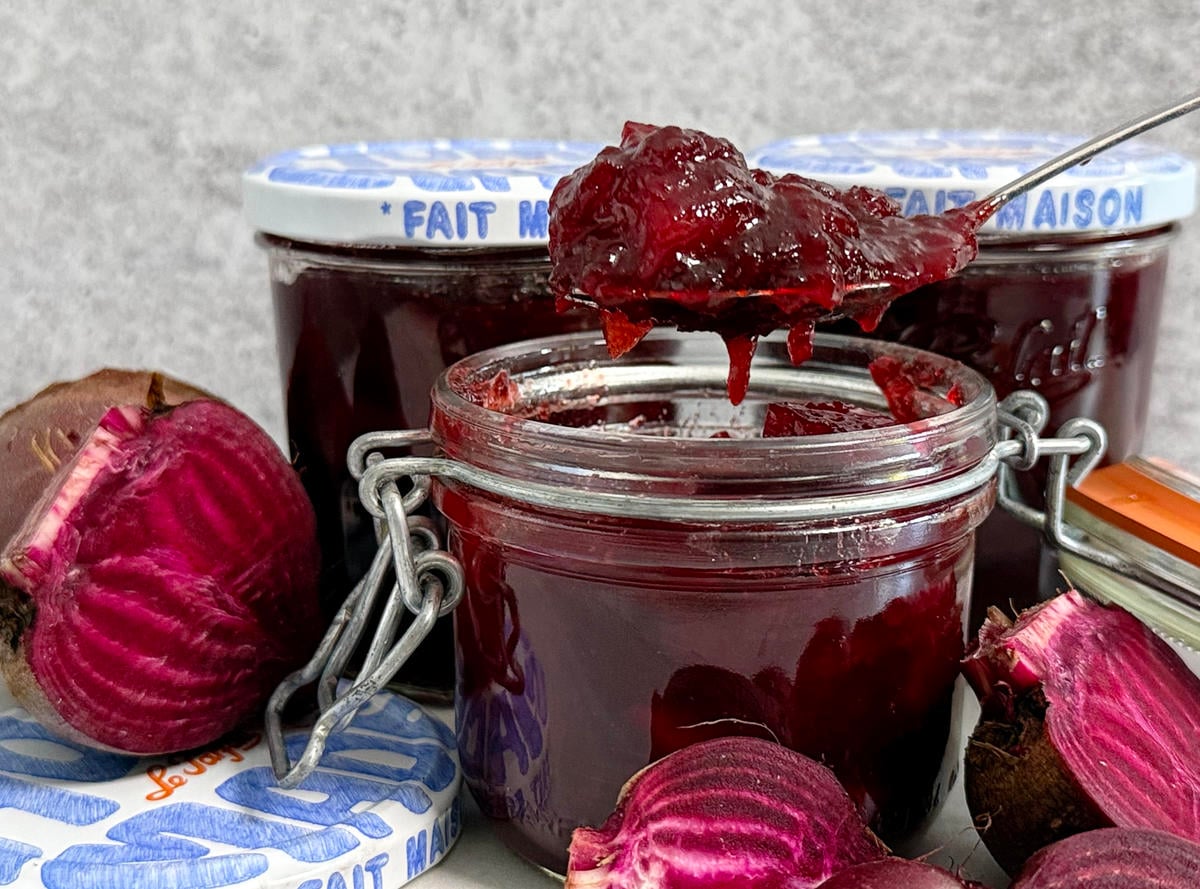
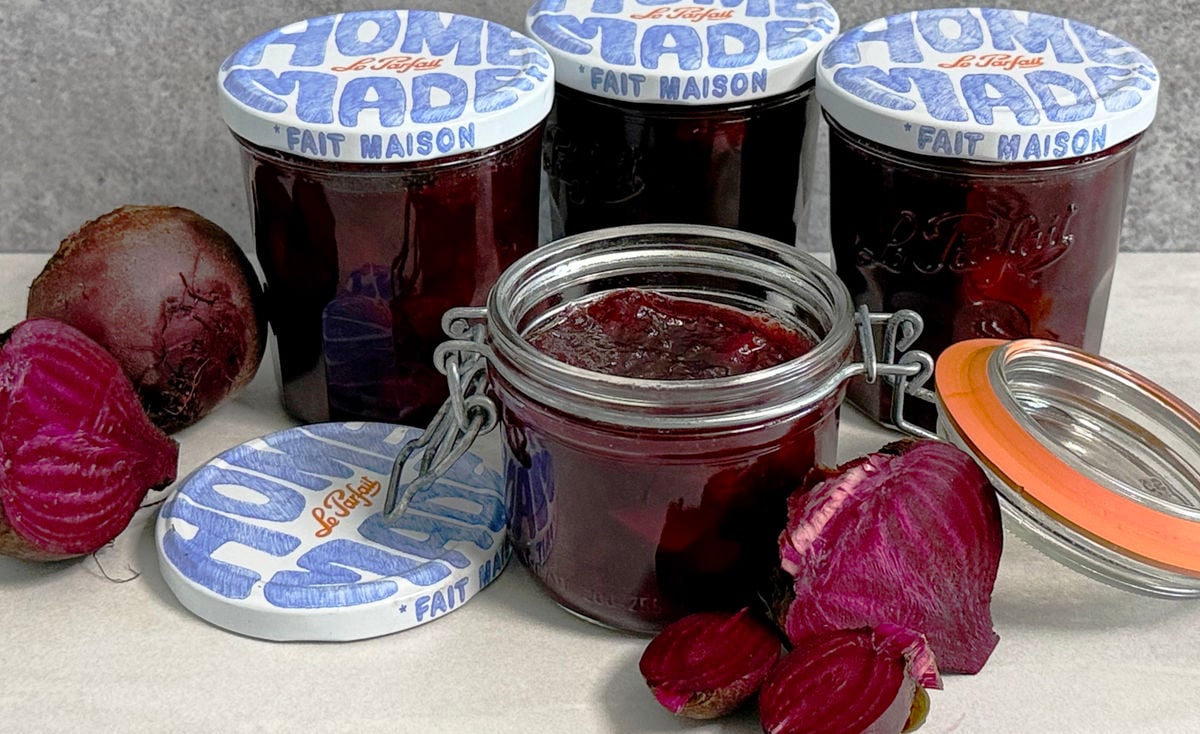
This Easy Sweet and Spicy Beetroot Chutney is made using my tried and tested homemade chutney formula.
Sweet, tangy and gently spiced, it’s perfect served with cheese, cold meats and sandwiches. It’s also a great way to make the most of fresh beetroot.
If you’ve made my Courgette Chutney or Green Tomato Chutney, you’ll recognise the reliable base recipe. I use it for many of my homemade preserves. I start with the same foundation and adjust the spices to complement the main ingredient.
This blog post contains affiliate links. As an Amazon Associate I earn from qualifying purchases. Please refer to Disclosure Page for further details.
Here, earthy beetroot is paired with warming spices and a gentle touch of chilli to make a rich, sweet and spicy chutney.
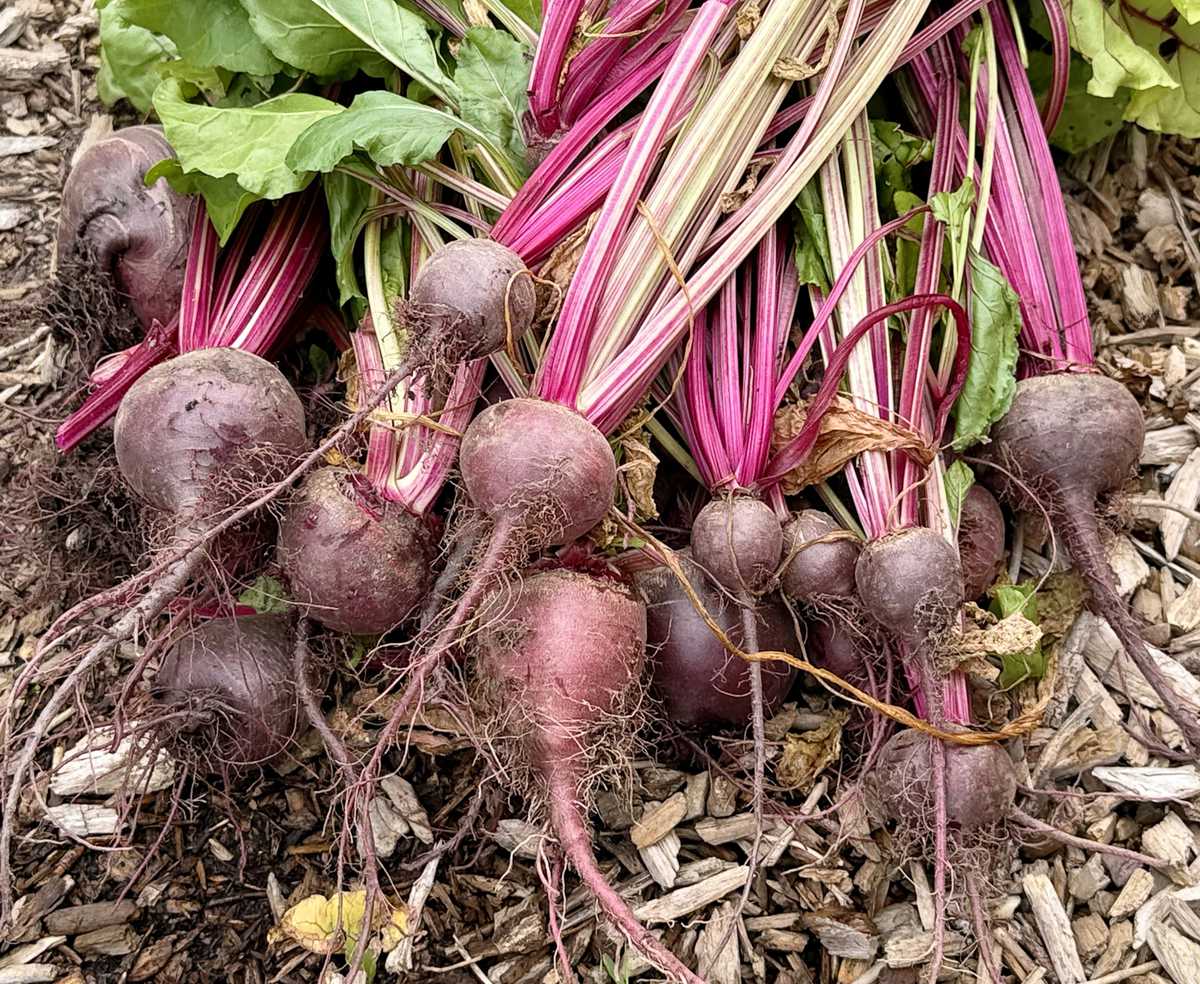
Whether you grow your own beetroot or pick up a fresh bunch from the farmers’ market, this easy beetroot chutney is well worth making. It makes a delicious addition to your store cupboard.
Ingredient Notes
For the fruit and veg content of the Easy Beetroot Chutney, in addition to beetroot, you will need apples and onions.
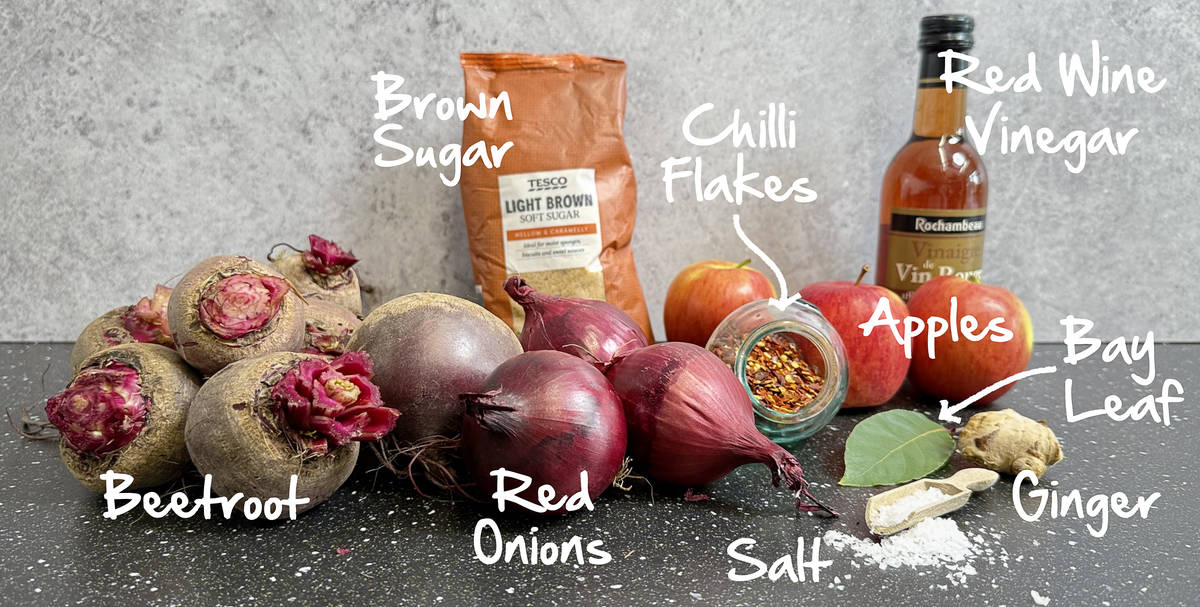
- Beetroot – choose firm, smooth beetroot without soft spots or signs of shrivelling. Smaller beetroot are often sweeter and more tender than very large ones.
- Red wine vinegar – adds a lovely fruity depth without the harsher flavour of malt vinegar. Choose a good quality vinegar with an acetic acid content of at least 5%, which is important for preserving chutney safely. Most reputable brands contain 5% or more; if the acidity isn’t stated on the label, it’s best to choose another brand.
- Sugar – I’ve used a light brown sugar, with a molasses flavour in mind. Feel free to use dark brown sugar if you prefer a darker colour chutney.
- Salt – adds flavour and helps to preserve your chutney.
- Chilli flakes – for a final kick of heat (quantity detailed in the recipe card). The amount of chilli I use adds gentle heat without being blow your socks off hot. Add more or less to suit your taste.
- Ginger – Fresh ginger root adds a gentle heat.
- Bay leaves – fresh or dried, both work well. Bay leaves are ideal for long, slow cooking and add a subtle earthy, savoury flavour. This helps balance the sweetness of the sugar and the sharpness of the vinegar.
Equipment
- Preserving pan – nice and wide so liquid can evaporate and your chutney becomes glossy and thick. If you make a lot of chutneys and jams it’s worth investing in a good solid preserving pan. I use an 8.5 litre Penguin Home Professional pan.
- A ladle.
- A jam funnel. I prefer to use a stainless steel funnel because vinegar reacts with other metals such as aluminium.
- 5 or 6 jam jars with screw top lids. Make sure to use vinegar proof lids – generally plastic coated on the underside to prevent any acid reaction with metal.
- Adhesive labels.
Before You Start
Sterilise jars shortly before they are to be used. This minimises the time in which the jars might pick up new bacteria and ruin your chutney. Make sure your jars are dry when you come to fill them.
I like to sterilise jars in the microwave. Clean your jars as normal and rinse. Whilst the jars are wet, pop them in the microwave for two minutes on full power. Remember the jars will be very hot, so remove with care.

- Pour boiling water into a bowl or jug and add the lids and leave for 5 minutes. Drain and leave to dry completely before using.
- Alternatively, wash jars and the lids in the dishwasher on a hot cycle.
- Always sterilise more jars than you think you will need.
How to make Easy Sweet and Spicy Beetroot Chutney
Making a chutney couldn’t be more straightforward – just follow these easy steps for your best homemade beetroot chutney.
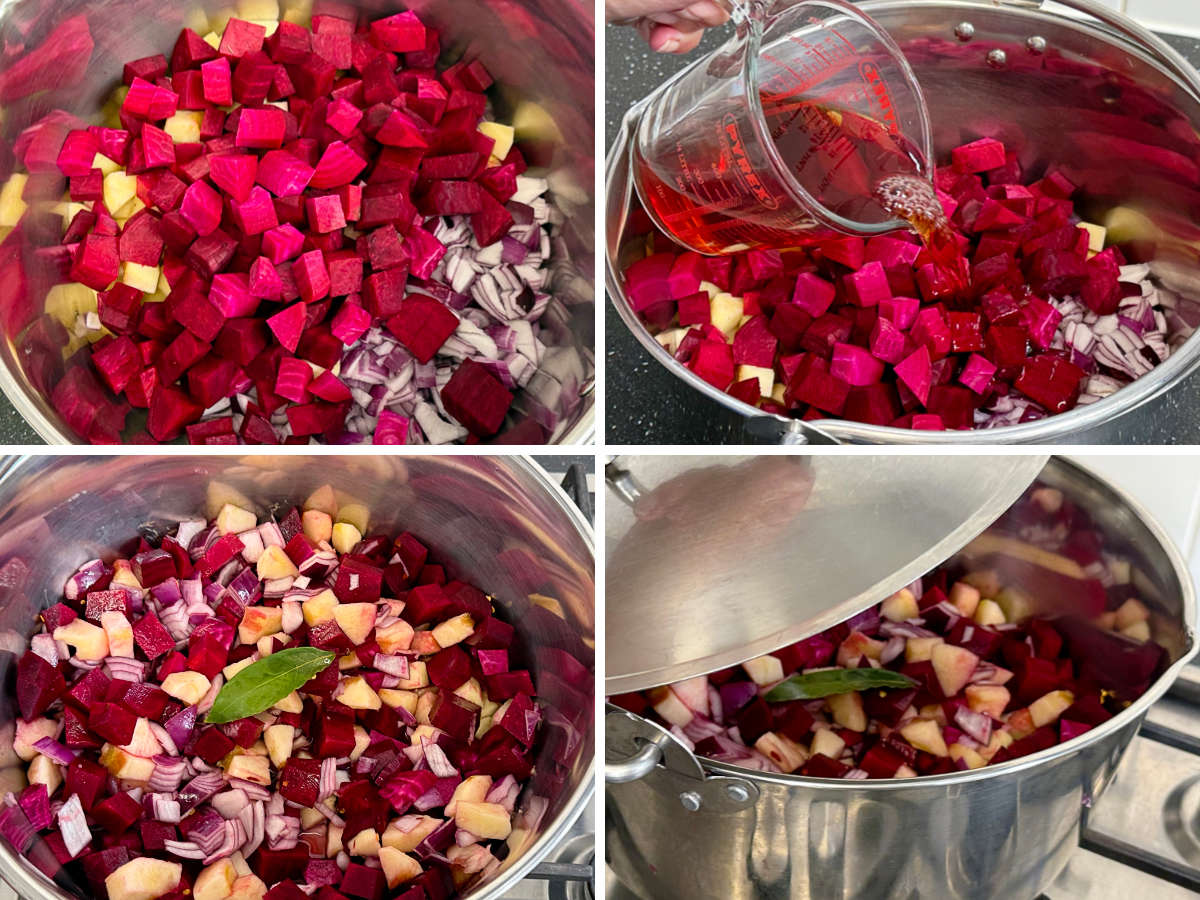
- Prepare the vegetables – beetroot stains so you may want to wear food safe gloves to peel and dice your beetroot.
- Cut beetroot, onions and apples into roughly the same size pieces so they cook evenly. Bear in mind whether you want a chunky chutney or a smaller diced chutney.
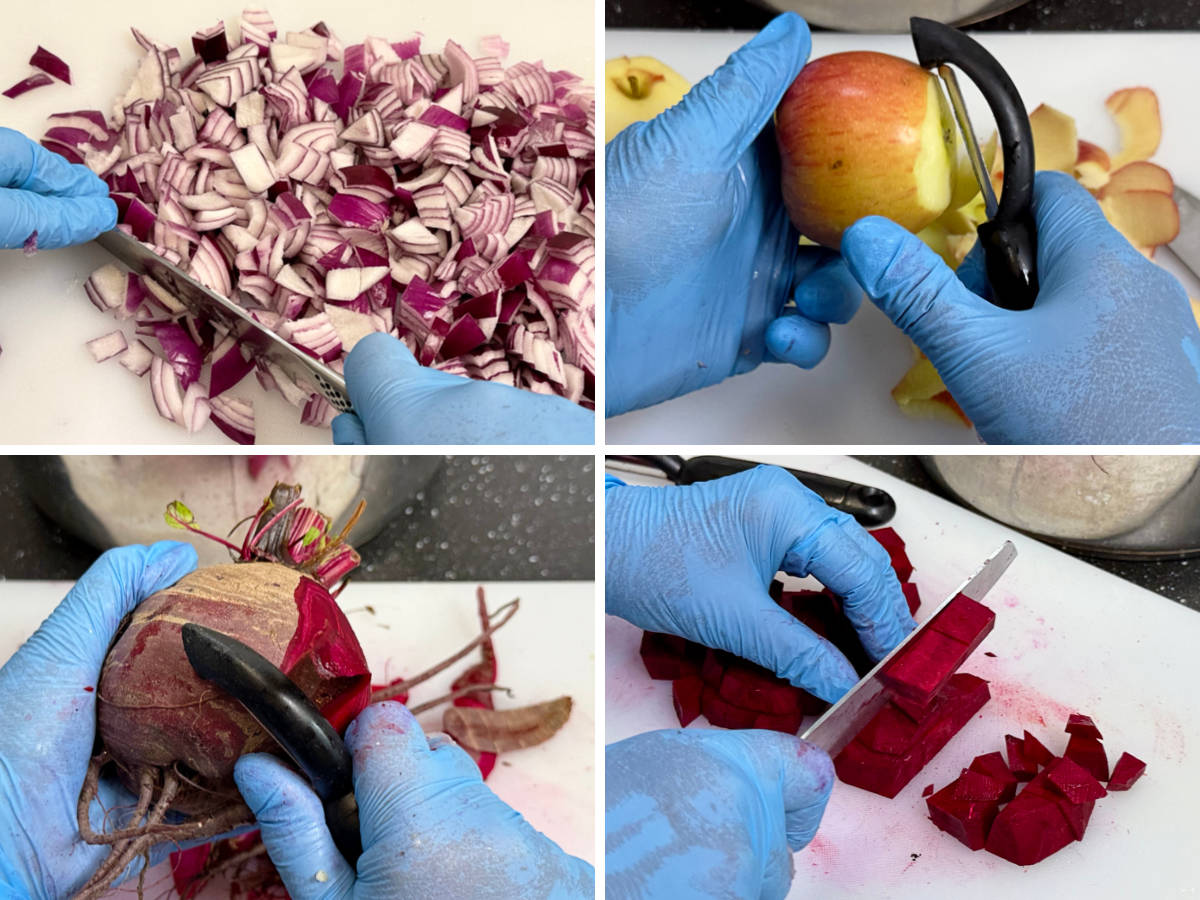
- Cook the beetroot, onions and apples with the vinegar and spices, covered, until softened.
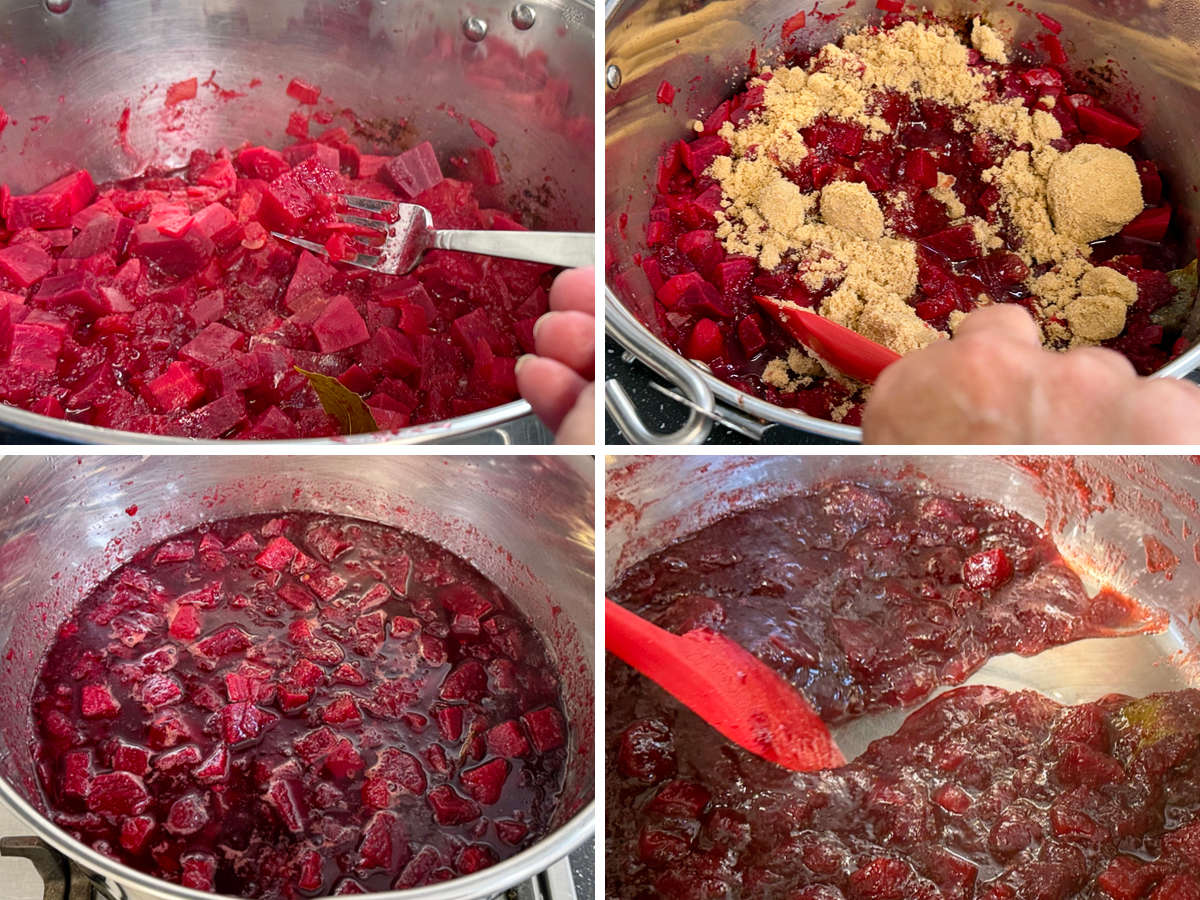
- Add the sugar and and stir until completely dissolved.
- This is an important step because undissolved sugar crystals can affect the texture of the finished chutney.
- Leave the chutney to simmer gently, uncovered.
- Stir occasionally during the first half of cooking.
- As the liquid reduces, stir more frequently to prevent the chutney catching on the bottom of the pan.
- The vinegar aroma will become much softer as the chutney cooks.
- The onions will become translucent.
- Allow the chutney to reduce – be patient. As the liquid evaporates you’ll notice the chutney becomes darker, thicker, glossier and rich smelling.
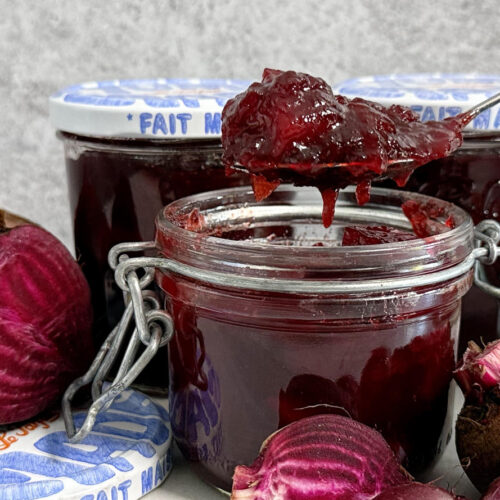
- The chutney is ready when a spoon pulled across the bottom of the pan leaves a clear trail. The chutney should slowly flow back together after a few seconds.
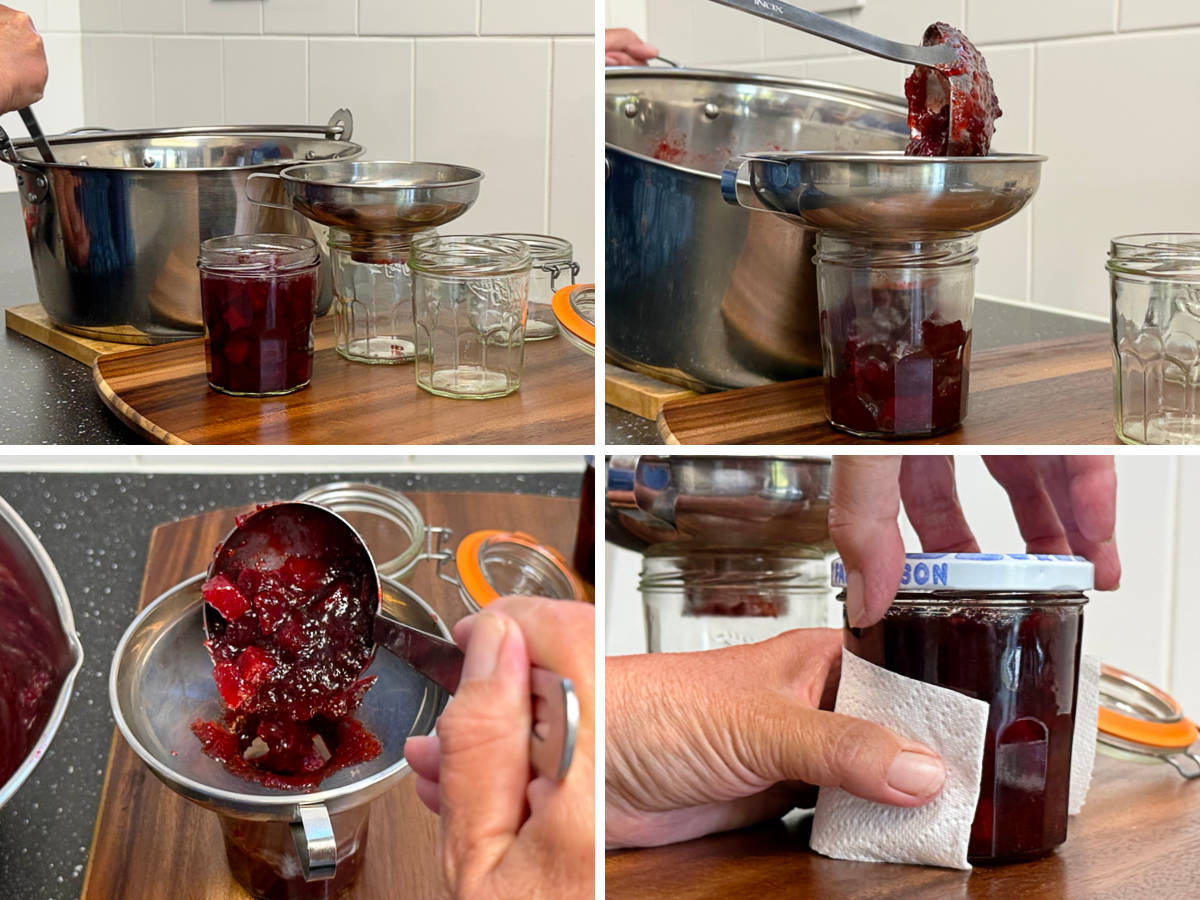
- Pot the chutney – remove the pan from the heat and leave the chutney to settle for about 5 minutes.
- Carefully spoon the hot chutney into warm sterilised jars.
- Fill each jar almost to the top, leaving a small headspace.
- Use the back of a spoon to gently press the chutney down and remove any air pockets. Wipe the jar rims clean, then seal immediately with sterilised lids.
Do you need to water bath chutney ?
In the UK, chutney is commonly preserved by spooning it while hot into warm, sterilised jars and sealing immediately. As the chutney cools, a vacuum forms inside the jar.
If you prefer to use the water bath canning method, follow a tested canning recipe. Use the recommended processing time for your jar size and altitude.
How do you know when chutney is ready?
One of the most common questions I receive is how to tell when chutney has finished cooking. Fortunately, there are several reliable signs.
- The chutney is ready when dragging a wooden spoon across the base of the pan leaves a clear channel. The mixture should take a second or two to slowly run back together.
- There shouldn’t be any pools of watery vinegar sitting on the surface.
- The chutney should look glossy rather than watery.
- Most importantly, remember that chutney thickens further as it cools.
- It’s always better to stop slightly early than to overcook it.
Expert tips
- Don’t rush the simmer – a gentle simmer develops far better flavour than boiling the chutney rapidly.
- Stir more often towards the end. As the liquid reduces, the concentrated sugars make the chutney more likely to catch on the base of the pan.
- Use a wide pan – a preserving pan allows moisture to evaporate much faster than a deep saucepan, reducing the cooking time.
- Label every jar – it’s surprising how quickly jars accumulate in the cupboard. Adding the date helps you remember when they’re ready to enjoy.
- Don’t open it too soon – this is probably the hardest part. Give your chutney time to mature. After a month the flavours will have developed and matured.
How long should Easy Beetroot Chutney mature ?
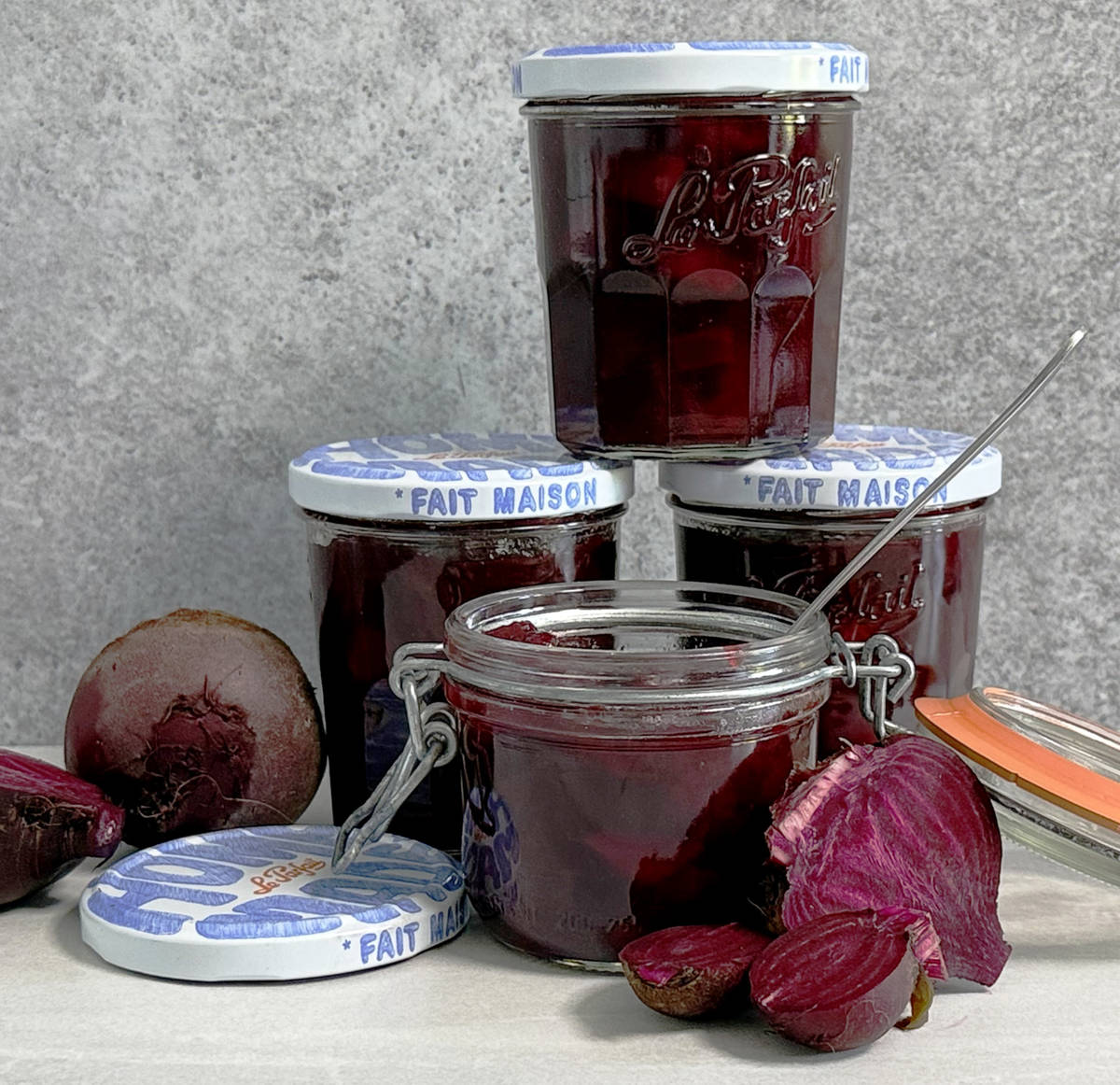
Although you can eat this chutney straight away, I highly recommend leaving it for at least 4 weeks before opening. During this time the sharpness of the vinegar softens, the spices mellow and the flavours blend together to create a much richer, rounder chutney.
If you can wait 6 to 8 weeks, it’s even better.
How long does it keep ?
Stored in sterilised, sealed jars in a cool, dark place, this beetroot chutney will keep for up to one year.
Once opened, keep the jar in the refrigerator and use it within 4 to 6 weeks.
Ways to enjoy Beetroot Chutney
Easy Beetroot Chutney is perfect on a cheese or ham sandwich. Serve it up with a traditional Ploughman’s lunch or with cheese and crackers. On barbecue evenings we’ve been known to add a spoon or two to a hot dog or burger.
But don’t limit your chutney to your favourite sandwich, use it in your cooking too:
- Add a tablespoon or two to your favourite stew, casserole or tagine.
- Puree a couple of tablespoons, add a little water and use as a glaze for your Christmas ham or roast.
- Puree a few tablespoons, add a little water and mustard and use as a dipping sauce.
- Spread some on toast, layer with cheese and grill.
More Homemade Chutney Recipes for you to try
Let’s Keep In Touch! You can Find Me On Pinterest, Instagram, Facebook and Twitter
Easy Beetroot Chutney (Sweet and Spicy)
Equipment
- Large preserving pan or saucepan
- Large saucepan lid or similar big enough to cover preserving pan
- Ladle
- 5 or 6 x 450g Sterilised jam jars
- Adhesive jam or chutney labels.
Ingredients
- 1 kg raw beetroot
- 500 g apples about 3 medium apples
- 500 g red onions about 3 medium onions
- 1 bay leaf
- 1 tsp chilli flakes
- 25 g fresh ginger grated
- 1 tsp sea salt
- 400 ml red wine vinegar
- 400 g light soft brown sugar
Instructions
- Peel and dice the beetroot, onions and apples into evenly sized pieces. Cut them smaller for a finer chutney or leave them slightly larger for a chunkier texture.
- Add the beetroot, onions and apples to a large pan with the vinegar and spices. Cover with a lid and simmer gently for about 30 minutes until the fruit and vegetables have softened.
- Remove the lid and take off the heat. Stir in the sugar until completely dissolved.
- Return the pan to a low heat and let the chutney mixture simmer for at least 1 ½ to 2 hours, stirring occasionally. As the chutney thickens, stir more often to prevent it catching on the base of the pan.
- Cook until the chutney is thick, dark and glossy. It is ready when a spoon drawn across the bottom of the pan leaves a clear channel that slowly fills back in after a few seconds.
- Whilst chutney is still hot, ladle into sterilised jars and fill to within 6mm (1/4″” inch) of the top. Use the back of a spoon to gently press the chutney down and remove any air pockets. Wipe the rims clean and seal immediately with sterilised lids.
Notes
- For US cup measures, use the toggle at the top of the ingredients list.
- This recipe makes enough to fill approximately five 450g jars.
- The recipe is easily doubled. Just make sure you use a large enough preserving pan so the ingredients can reduce. Also, you’ll need to cook for an extra half an hour to an hour. Tripling or quadrupling the quantities is not recommended.
- Leave to mature for at least four weeks.
- Stir regularly towards the end of cooking.
- Store unopened jars in a cool, dark place for up to a year.
- Refrigerate after opening and use within four weeks.
- Nutrition information is approximate and meant as a guideline only.
Canning noteIn the UK, chutney is commonly preserved by ladling it while hot into warm, sterilised jars and sealing immediately. As the chutney cools, a vacuum forms inside the jar. If you prefer to use the water bath canning method, follow a tested canning recipe. Use the recommended processing time for your jar size and altitude.